Dog Training: Must-Have Tips to Stop Puppy Biting Effortlessly
Puppy biting is one of the most common—and often most frustrating—challenges new dog owners face. Effective dog training is key to curbing this behavior early and ensuring your furry friend grows into a well-mannered companion. While biting is a natural part of how puppies explore the world and interact with their littermates, it’s essential to teach them boundaries before those sharp little teeth turn into a painful habit.
In this article, we’ll dive into must-have dog training tips to stop puppy biting effortlessly, helping you build a foundation of trust, respect, and comfort with your puppy that lasts a lifetime.
Understanding Why Puppies Bite
Before tackling the behavior, it’s important to understand the why behind puppy biting. Puppies use their mouths to play, communicate, and learn about their environment. During the teething phase, which typically begins around 3-4 weeks and lasts until about 6 months, puppies experience sore gums and a strong urge to chew.
Puppy biting can also be a sign of excitement, stress, or simply a need for attention. Understanding the root cause allows owners to address the behavior effectively without resorting to harsh punishments that could harm the bond between dog and human.
The Role of Dog Training in Curbing Puppy Biting
Dog training isn’t just about commands—it’s about teaching your puppy how to behave in ways that are acceptable, safe, and enjoyable for everyone involved. Stopping puppy biting requires patience, consistency, and positive reinforcement.
Early training focused on bite inhibition helps puppies learn to control the pressure of their bite. This skill is crucial since dogs naturally bite harder when playing rough or frightened. With proper training, puppies learn to be gentle and purposeful with their mouths.
Must-Have Dog Training Tips to Stop Puppy Biting Effortlessly
1. Use Positive Reinforcement to Encourage Good Behavior
One of the most effective strategies in dog training is positive reinforcement. Whenever your puppy interacts without biting or stops biting when told, reward them immediately with treats, praise, or toys. This helps your puppy associate gentle behavior with positive outcomes.
Avoid yelling or hitting, as these can increase anxiety and worsen biting. Instead, calmly redirect their attention to an appropriate behavior to maintain a safe and loving environment.
2. Provide Appropriate Chew Toys
Since puppies bite and chew as a part of teething, offering a variety of chew toys can satisfy this urge while protecting your hands and furniture. Choose durable, safe toys that are designed for teething puppies.
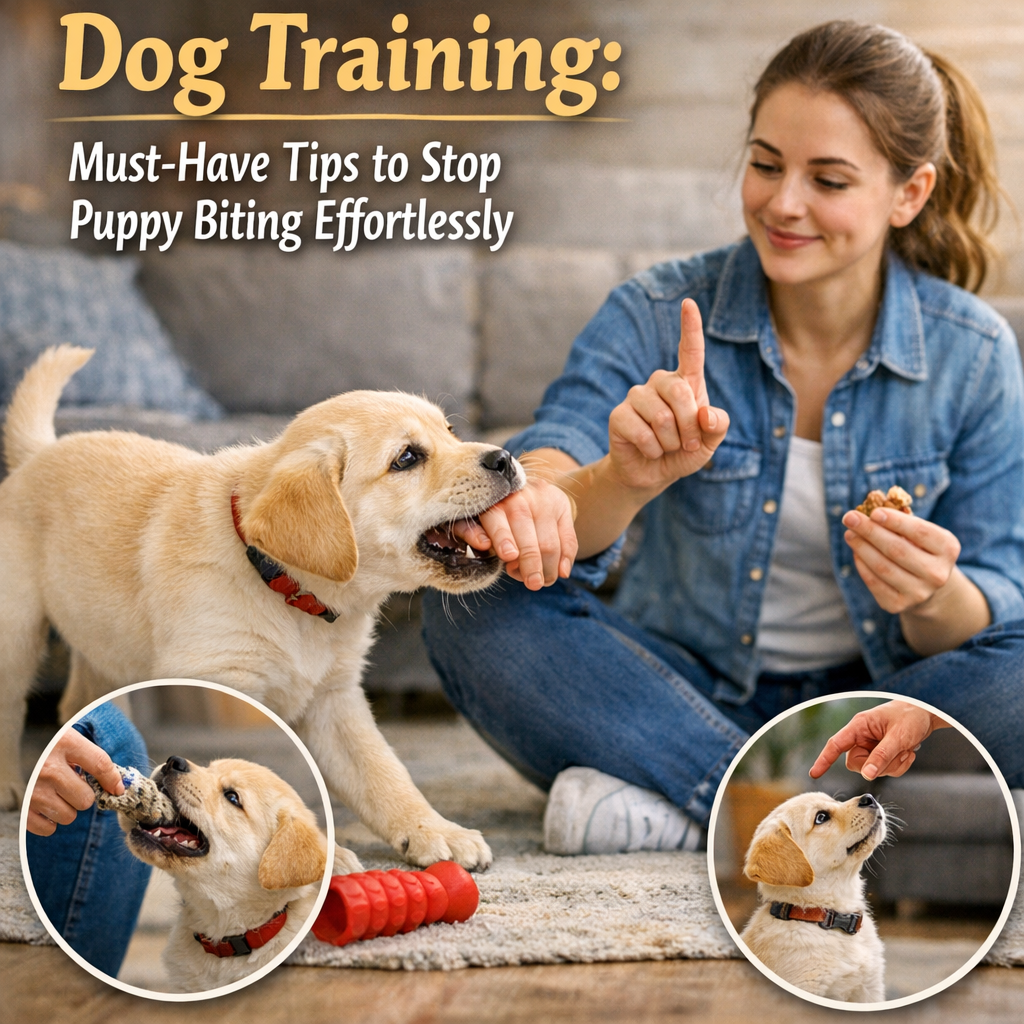
Whenever your puppy tries to bite your hands or feet, gently replace your body part with a chew toy. This teaches them what is acceptable to bite and slowly reduces the habit of biting people.
3. Teach the “No Bite” Command
Teaching a simple command like “No Bite” helps your puppy understand that biting is not allowed. Use a firm but gentle tone to say “No Bite” whenever they nip at you, and then immediately redirect their attention to a chew toy or another acceptable activity.
Consistency is key: repeat this every time your puppy attempts to bite. Over time, with positive reinforcement, your puppy will learn to stop biting when hearing the command.
4. Employ Timeouts When Necessary
For puppies that don’t respond to commands or redirection, short and calm timeouts can be an effective tool in dog training. If your puppy bites you hard or repeatedly, calmly remove yourself from their play area or place them in a safe space for one to two minutes.
Timeouts are not meant to be punishment but rather a way to communicate that biting leads to the end of playtime or attention. This helps puppies connect the dots between biting and negative consequences.
5. Socialize Your Puppy with Other Dogs
Puppies learn a great deal about bite inhibition from interacting with other dogs and littermates. They quickly figure out how much pressure is too much when biting during play.
Organize safe playdates or enroll your puppy in puppy kindergarten classes to encourage socialization. This not only helps with biting but also fosters a well-rounded social demeanor.
6. Be Patient and Consistent
Dog training takes time, especially when correcting a natural behavior like biting. It’s important to remain patient and stay consistent with your training approach. Mixed messages can confuse your puppy and prolong the process.
Set clear boundaries from day one and keep training sessions short but frequent to maintain your puppy’s attention and enthusiasm.
When to Seek Professional Help
If puppy biting persists despite your best dog training efforts, it might be time to consult a professional dog trainer or veterinary behaviorist. Persistent biting can sometimes be a sign of anxiety, fear, or other underlying issues that require expert assessment.
A professional can provide tailored guidance and training approaches that work for your puppy’s unique temperament and environment.
Conclusion
Stopping puppy biting doesn’t have to be a stressful battle. With the right dog training strategies—focused on positive reinforcement, consistency, and understanding your puppy’s needs—you can guide your furry friend toward gentle behavior effortlessly. Remember, patience and empathy go a long way in building a loving relationship where your puppy feels safe, happy, and well-behaved.
By applying these must-have tips, you’re not only curbing biting but creating the foundation for a lifetime of good manners and bonding with your best canine companion.