Dog Grooming Tips at Home: Must-Have Secrets for Best Dog Health
Maintaining your pet’s well-being is a rewarding yet essential responsibility, and dog grooming plays a pivotal role in ensuring your furry friend stays healthy and happy. Dog health is significantly impacted by consistent grooming habits, and with the right knowledge, you can provide excellent care for your dog right from the comfort of your home. Whether you have a playful puppy or a seasoned canine companion, these dog grooming tips at home will help you keep your dog looking great and feeling fantastic.
Why Grooming is Essential for Dog Health
Good dog health is not just about regular vet visits and a nutritious diet; grooming is equally important. Grooming helps identify potential health problems early, such as skin infections, parasites, or wounds. Moreover, a well-groomed coat avoids matting, which can lead to discomfort and skin irritations.
Regular brushing, bathing, and nail trimming contribute to better circulation, remove dirt and dead hair, and prevent the risk of infections. Additionally, grooming fosters a stronger bond between you and your dog, making your dog more comfortable with being handled and cared for.
Essential Dog Grooming Tips at Home for Optimal Dog Health
1. Brush Your Dog’s Coat Regularly
Brushing is one of the easiest yet most effective ways to maintain your dog’s coat. Depending on the breed and coat type, brushing frequency can vary. Dogs with long or curly hair may require daily brushing to avoid tangles and matting, whereas dogs with short coats might only need brushing once or twice a week.
Brushing helps distribute natural oils throughout the coat, promoting shine and softness. Additionally, it stimulates the skin, improving blood circulation, and helps you check for ticks, fleas, or any abnormalities.
2. Bathe Your Dog Properly and Timely
While too frequent bathing can strip essential oils from your dog’s skin, regular baths are crucial to keep your pet clean and fresh. Use a mild dog shampoo appropriate for your dog’s skin type, avoiding human shampoos that can cause irritation.
The general recommendation is to bathe your dog once every 4 to 6 weeks unless they get particularly dirty or smelly. Make sure to rinse thoroughly to avoid any shampoo residue, which can cause itching or dryness.
3. Keep Nails Trimmed for Comfort and Safety
Long nails can cause discomfort or even lead to joint issues in dogs. Trimming your dog’s nails at home is safer and less stressful when done properly. Use a dog-specific nail clipper or grinder, cutting small amounts regularly rather than attempting a big trim all at once.
If you’re unsure where the quick (the sensitive part in the nail) is located, aim to trim gradually or seek beginner tutorials to prevent pain or bleeding. Keeping nails short improves your dog’s walking comfort and prevents accidental scratches.
4. Clean Ears to Prevent Infections
Ear health is an often overlooked aspect of dog grooming but vital for preventing infections. Use a dog-safe ear cleaning solution and cotton balls (avoid cotton swabs) to gently clean the outer ear and visible parts of the ear canal.
Dogs with floppy ears or those prone to swimming may need more frequent ear cleaning, as moisture can lead to bacterial growth or yeast infections.
5. Maintain Dental Hygiene
Good dental care is another pillar of excellent dog health that grooming can support. Regular brushing of your dog’s teeth helps prevent plaque buildup, gum disease, and bad breath.
Use a toothbrush and toothpaste designed specifically for dogs, as human dental products can be harmful to pets. Starting teeth brushing early in your dog’s life makes it easier to maintain a healthy mouth throughout their lifetime.
Additional Dog Grooming Tips at Home for a Stress-Free Experience
Create a Comfortable Grooming Space
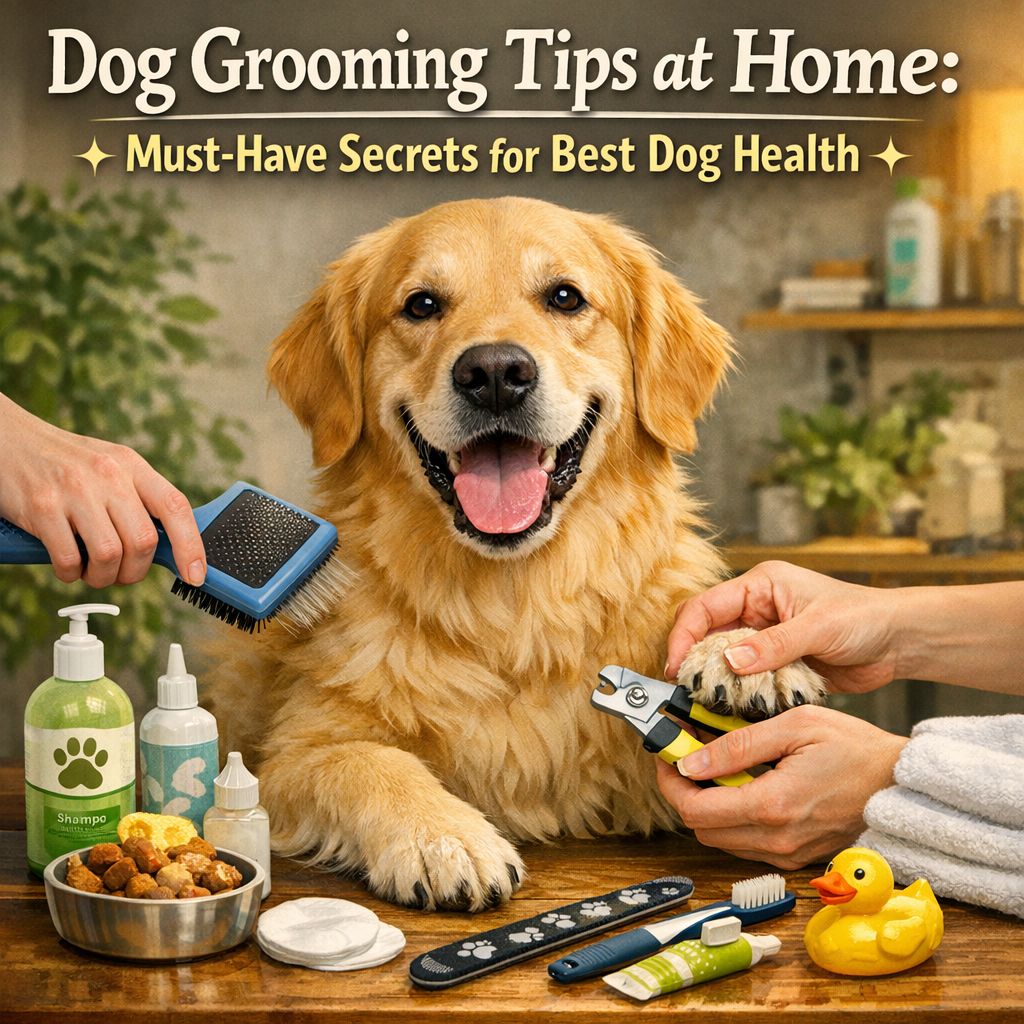
Choose a quiet, well-lit area for grooming sessions to reduce your dog’s anxiety. Have all your tools—brush, nail clippers, towels, treats—within reach to keep the process smooth and enjoyable.
Use Positive Reinforcement
Reward your dog with treats and soothing praise during and after grooming. This helps build positive associations and makes future grooming easier.
Know When to Seek Professional Help
While many grooming tasks can be handled at home, certain situations require professional expertise. If your dog’s coat is severely matted or you notice any unusual lumps, wounds, or persistent odors, consult a veterinarian or a professional groomer.
Conclusion
Maintaining dog health through regular grooming at home is a practical and fulfilling endeavor for any pet owner. By adopting these essential grooming tips, you’ll not only enhance your dog’s physical health but also strengthen the emotional connection you share. With patience and consistency, grooming becomes a cherished routine that supports a happier, healthier, and more vibrant life for your beloved canine companion.