Dog Grooming Tips at Home: Must-Have Secrets for Best Dog Health
Maintaining your pet’s dog health through regular grooming is essential for their overall well-being and happiness. Grooming isn’t just about making your dog look good; it plays a crucial role in keeping their skin, coat, and nails healthy while preventing various health issues. Many pet owners hesitate to visit professional groomers frequently due to cost or anxiety their dog may experience, but the good news is that with the right knowledge, you can effectively groom your furry friend at home. In this article, we’ll explore essential dog grooming tips and secrets to help you keep your dog healthy and comfortable.
Why Grooming Is Vital for Dog Health
Before diving into the practical tips, it’s important to understand why grooming is directly linked to dog health. Regular grooming helps in:
– Preventing infections: Cleaning your dog’s ears and trimming nails reduces the chance of infections.
– Detecting health problems early: During grooming, you can notice lumps, bumps, skin irritation, or parasites that need medical attention.
– Maintaining skin and coat condition: Grooming removes dirt, dead hair, and excess oils, minimizing skin issues such as dryness and dandruff.
– Improving comfort: Matted fur can cause pain and discomfort; grooming prevents this.
– Enhancing bonding: Grooming sessions strengthen the relationship between you and your pet.
Essential Dog Grooming Tips at Home
1. Establish a Grooming Routine
To keep your dog healthy and happy, consistency is key. Create a grooming schedule based on your dog’s breed, size, and hair type. For example, long-haired breeds usually require more frequent brushing than short-haired ones. Ideally, brush your dog’s coat several times a week and bathe them every 4-6 weeks depending on activity level and dirt buildup.
2. Choose the Right Tools
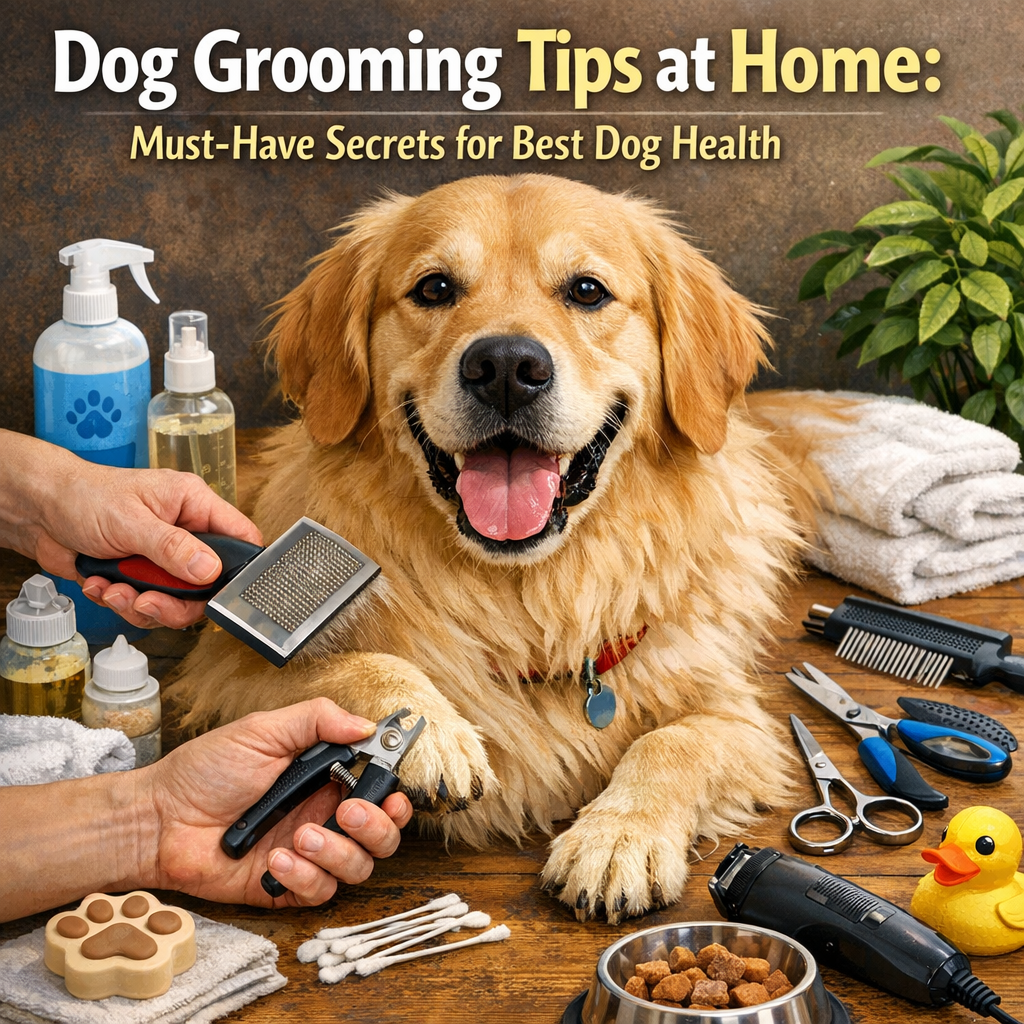
Having the appropriate grooming tools helps you achieve better results and ensures a comfortable experience for your dog. Here are some must-have tools:
– Slicker brush: Best for removing loose fur and tangles, especially in long-haired dogs.
– Comb: Useful for finer grooming, especially around sensitive areas like the face.
– Nail clippers: Regular clipping prevents overgrowth, splitting, and discomfort.
– Dog shampoo: Use shampoos formulated specifically for dogs, avoiding human products that can irritate their skin.
– Ear cleaner: Helps prevent infections by cleaning wax and debris.
– Toweling and blow dryer: To dry your dog efficiently after baths, particularly in colder weather.
3. Brushing for a Healthy Coat and Skin
Brushing your dog regularly isn’t simply about removing dirt—it stimulates blood circulation and distributes natural oils across the coat. This promotes a shiny, healthy look and minimizes shedding around your home. Start brushing gently from the head moving to the tail, paying attention to areas prone to matting like behind the ears and under the legs.
4. Bathing Without Overdoing It
Bathing your dog helps remove dirt and odors, but overbathing can strip essential oils from the skin, causing dryness and irritation. Use lukewarm water and a gentle dog shampoo, avoiding the eyes and inside the ears. Rinse thoroughly to remove all soap residues, and dry with a towel or low-heat blow dryer. Keep baths to every 4-6 weeks, or as needed based on your dog’s lifestyle.
5. Nail Care: A Step Often Overlooked
Overgrown nails can cause pain and even affect your dog’s gait, leading to joint problems. Trim nails carefully every few weeks, using specialized dog nail clippers. If you’re unsure or nervous about cutting too short and causing bleeding, consult a vet or professional groomer for guidance. Additionally, some dogs wear down their nails naturally by walking on rough surfaces, but regular inspection is necessary.
6. Ear Cleaning for Preventing Infections
Regularly check your dog’s ears for redness, odor, or discharge, which might indicate infections or mites. Use a vet-approved ear cleaning solution and cotton balls—not cotton swabs—as they can injure the ear canal. Gently wipe the outer ear and avoid inserting anything into the ear canal. Keep ears dry, especially for breeds prone to wax buildup and infections.
7. Dental Care: A Complete Grooming Routine
Dental health often gets neglected in grooming routines, but it’s integral to your dog’s overall wellness. Plaque and tartar buildup can cause bad breath, painful infections, and even systemic issues affecting heart and kidney health. Brush your dog’s teeth regularly with canine toothpaste and provide dental chews to promote oral hygiene.
8. Monitor for Parasites and Skin Issues
While grooming, keep an eye out for ticks, fleas, and other parasites that jeopardize dog health. Use appropriate preventive treatments recommended by your vet. Also, watch for signs such as red or inflamed skin, hair loss, or unusual lumps and seek professional advice if you notice abnormalities.
Conclusion
Providing your dog with proper grooming at home is a vital component of maintaining excellent dog health. By creating a grooming routine, using the right tools, and paying attention to all aspects of your dog’s hygiene—from brushing and bathing to nail and ear care—you help ensure your furry friend stays comfortable, happy, and disease-free. Remember, the time and care you invest in grooming not only improves their physical health but also enhances your bond with your loyal companion. With these must-have secrets, home grooming can be an enjoyable experience benefiting both you and your pet.